What happened
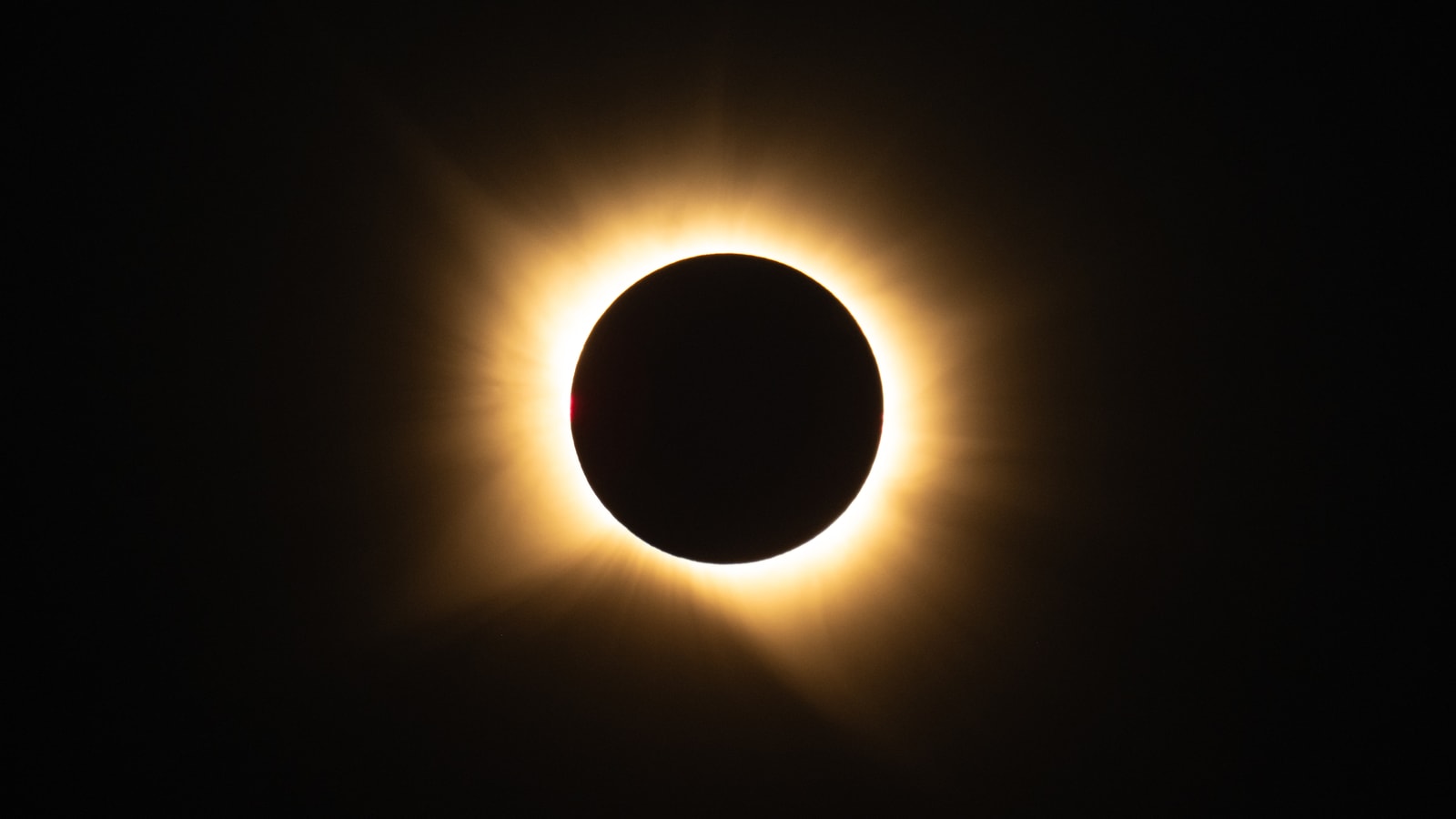
The total solar eclipse of August 12 crossed parts of Greenland, Iceland, northern Russia, the Atlantic Ocean, Spain and a small corner of Portugal. NASA’s Image and Video Library identifies this photograph as totality seen from San Millán de los Caballeros in León, Spain, and credits NASA photographer Bill Ingalls.
The official library provides the original JPEG at 6,975 × 3,923 pixels together with smaller derivatives. NASA’s event page lists totality in nearby León from 8:28 p.m. to 8:30 p.m. local time and says totality lasted under two minutes for most observers along the path. The library description does not document an exposure sequence, RAW workflow or compositing method, so MANAZYR does not infer one from the finished image.
Why it matters
This is the kind of current, exact visual a news page should favour: a real photograph of the event, tied to a named photographer, location, date and first-party archive. Its value is documentary before it is technical. Without the original workflow and exposure data, the corona’s appearance cannot be used to rank cameras, lenses or editing software.
What we're watching
We are watching for further NASA galleries, published capture metadata and the scientific results of the agency-supported eclipse campaigns. Any later discussion of camera settings or processing will remain tied to first-party metadata rather than visual guesswork.